Oregon Brings Down Hammer on Drinking Drivers

By Hugh Duvall Published: Monday, August 14, 2006

Many people are still unaware of these severe consequences. So, if you
ever drink any amount of alcohol and then drive, read every word of this
article. If you know anyone who does, grab a pair of scissors and start
clipping.

Everyone who drives in Oregon should, at a minimum, be aware of the
following:

The legal limit: It’s not as simple as 0.08 percent. There are two
ways a person is considered under the influence of intoxicants in Oregon.
First, if his or her blood alcohol content is 0.08 percent or greater.
However, a person is also considered under the influence of intoxicants
if any one of his or her mental or physical abilities is adversely
affected by intoxicants to a perceptible degree, regardless of the
person’s blood alcohol level.

A person can be guilty of DUII with a blood alcohol content of 0.07,
0.06 or even 0.05 percent! And “intoxicants” includes more than alcohol.
A person is guilty of DUII if he or she drives under the influence of
drugs – even prescription drugs. Oregon’s law is very close to a zero
tolerance standard.

Two problems for the price of one: Most DUII cases involve two
governmental entities pursuing action independently against the accused:
1) The state Driver and Motor Vehicle Services Division takes
administrative action, and 2) a city or the state prosecutes the person
criminally.

If a person blows a 0.08 percent or greater, the DMV will seek a
driver’s license (implied consent) suspension of 90 days to one year, or
if a person refuses a breath or blood test, a one- to three-year
suspension. This DMV action is completely separate from any court
suspension.

The four poison pills: If a person is convicted of DUII, every court
in Oregon must impose at least these four consequences:

1) Two days in jail or 80 hours of community service,
2) a $1,000 fine,
3) payment for and completion of an alcohol treatment program, and
4) a one-year driver’s license suspension (separate from the DMV
implied-consent suspension mentioned above).

The diversion program: It’s not a guaranteed safe haven. A person
charged with DUII may be eligible for Oregon’s DUII diversion program
if:

1) he or she has not been convicted of a DUII or been in a diversion
program in the past 10 years,
2) the presently charged DUII did not involve an accident in which
anyone but the person accused was injured, and
3) the person did not have a commercial driver’s license (even if that
person was not operating a commercial motor vehicle at the time). If the
person successfully completes this diversion program, then the court
dismisses the criminal case.

So, while the DUII diversion program allows many to avoid a
conviction, if a person has a commercial license, or the matter involved
an injury, this option is unavailable.

The bad news about blackout periods: All DMV implied consent
suspensions have a period during which absolutely no driving is allowed –
none. This “blackout period” lasts at least 30 days, but can be
considerably longer. This can obviously throw the person’s life into
turmoil.

The really bad news is for repeat offenders: Oregon imposes a
“permanent” driver’s license revocation on a third or greater DUII
conviction – regardless of over how long a period those convictions
occurred. For example, if a person had two DUII convictions while in
college 20 years earlier, and is convicted of a third, perhaps because he
or she was ineligible for the diversion program, the court will impose a
“permanent” revocation.

A fourth DUII conviction within a 10-year period is a felony. No
driving privileges are available for these individuals for at least 10
years following such conviction.

The bitter truth: An urban myth has evolved that if someone charged
with DUII has enough money, or the right attorney, then he or she can
“beat” the charge. Not in Oregon. Oregon’s DUII laws are some of the
toughest in the country. And the least someone can hope to face in court
is a police officer willing to testify that in his or her opinion the
accused drove under the influence of intoxicants.

Anyone knowledgeable about Oregon’s DUII law thinks twice before
drinking any amount of alcohol and then driving.

Hugh Duvall, a criminal defense attorney based in Eugene, is vice
president of the Oregon Criminal Defense Lawyer’s Association.

Source: http://www.registerguard.com

DUI Attorneys


BMV Lets Customers Access Records Online

BMV Lets Customers Access Records Online
Motorists also can renew their registration, schedule a driver’s test
and more.

By Lauren Dunford

The Ohio Bureau of Motor Vehicles instituted a new customer service
feature Friday that enables motorists to obtain unofficial copies of
their driving records online.

“Drivers will be able to make sure that their driving record as they
know it is consistent with what the BMV has,” said Fred Stratmann, BMV
spokesman.

“People are unaware of how many points they have on their license,” he
said.

With the new feature, motorists can access that information, stay up
to date on traffic violation requirements and prevent the potential for
license suspension or arrest.

In addition to viewing driving records online, motorists can renew
their vehicle registration, schedule a driver’s test, record a change of
address and access the state’s online organ donor registry.

Drivers also can view their license issue date as part of a new
identity theft prevention feature added last month. A feature allowing
customers to view license reinstatement information is in the works.

The customer service page was widely used even before the addition of
the driving records feature, with more than 600,000 online vehicle
registration renewals to date.

“Anytime you can provide services to your customers that makes it more
convenient for them to do things the state requires them to do, it’s a
success,” Stratmann said.

“We’ve been working hard on customer feedback on the things they would
like to see. We’re making more features available to the public for their
convenience.”

Source: http://www.daytondailynews.com

DUI Attorneys


Ohio Court Rules on Hospital's Certification

Aggravating the DUI Menace

October 6, 2005

The Ohio Supreme Court’s narrow decision in a Dayton aggravated
vehicular homicide case will be cheered by criminal defense lawyers
throughout the Buckeye State, but it seriously obstructs public efforts
to rid the highways of dangerous drunken drivers.

The court, voting 4-3 in a ruling written by Justice Judith Lanzinger,
threw out the conviction of John Mayl, who was at the wheel of a pickup
truck that struck and killed a construction worker, Lorna Dingess, 30.
The woman was part of a work crew repairing potholes on I-75 in Dayton
around midnight on Nov. 19, 2000.

About 40 minutes after the incident, a sample of Mayl’s blood was
taken in a hospital during treatment for minor injuries. The test put his
blood-alcohol content at 0.207, more than twice the state’s 0.08
threshold to prove drunken driving and, thus, aggravated vehicular
homicide.

It would seem like a slam-dunk case, but the court ruled the test was
invalid and threw out the conviction because the hospital was not
certified by the state health department to perform the forensic
procedure for use in court, and because it disposed of the blood sample
within five days rather than holding it for one year.

According to the court decision, no one quibbled with the accuracy of
the blood test, or claimed that the blood analysis was conducted
improperly by hospital personnel or the laboratory.

While we are mindful that the law must be scrupulously followed, this
is one of those cases that rends the heart of anyone who expects justice
in the courts. The perpetrator of the crime is acquitted, but the victim
is still dead.

Mayl, who had objected to the blood test but was told it was needed
for medical reasons, did not go entirely unpunished. He pleaded no
contest, was given a four-year prison term, and served a year before
being released on appeal.

Nonetheless, the Supreme Court – which reversed opinions by at least
six state appellate courts with its ruling – has made it unnecessarily
difficult for authorities to gain convictions in drunken driving cases.
None of Toledo’s hospitals currently is certified by the state for these
particular tests, even though doing so seems to be largely a matter of
paperwork rather than expertise or equipment.

This means that perfectly competent hospitals and laboratories must
now go to the considerable extra trouble of obtaining health department
permits, or the legislature must amend the law, or both. The sooner a
solution is accomplished, the safer that motorists will be in this
state.

The DUI law already is among the most complicated and heavily nuanced
statutes in Ohio’s law books, a legacy of the bad old days when drunken
driving was winked at rather than vigorously prosecuted. Creating an
additional hoop for authorities to jump through to get convictions is
probably not what the court intended, but that is the practical effect of
its ruling.

It is especially distressing when the list of Ohioans with a dozen or
more DUI arrests continues to grow.

Toledo Blade

More:


Glitch in DUI May Be Trend

Oct. 06, 2005 Judge tosses out a charge because a breath test operator
was not certified on particular machine.

By DAVID WEISS [email protected]

WILKES-BARRE ­ A judge’s ruling that stopped a police
officer from testifying about a man’s blood-alcohol level in a
drunken-driving case could weaken other cases, attorneys said.

Luzerne County Court of Common Pleas Senior Judge Patrick Toole on
Tuesday ruled Wayman Miers, an officer at the county’s DUI Processing
Center, could not testify about the suspect’s blood-alcohol level because
Miers was not certified to operate a particular breath-test machine.

An official at the center insists Miers is certified and the decision
just highlights a mix up regarding the equipment used at the center.

Miers used the center’s Breathalyzer, called an Intoxilyzer 5000EN, to
learn David Kresge had a blood-alcohol level of 0.21 percent after he
drove a vehicle into a Wilkes-Barre building in November. An adult driver
is considered intoxicated with a blood-alcohol level of 0.08.

Kresge’s attorney, Joseph Albert, challenged Miers’ qualifications to
operate the machine saying Miers was certified on the Intoxilyzer 5000,
not the Intoxilyzer 5000EN, so he should not be allowed to testify.

Toole agreed, and one count of drunken driving was dismissed.

The jury still convicted Kresge on a separate drunken-driving charge
that does not require a blood-alcohol level.

Despite the conviction, attorneys say the ruling will shorten Kresge’s
sentence and could impact all pending cases from the center.

Under the drunken-driving law, Kresge would have most likely faced a
sentence of 90 days to five years in prison based on the high
blood-alcohol level and a prior drunken-driving arrest, said local
defense attorney Ferris Webby .

Because the blood-alcohol level charge was dismissed, that level could
not be used against Kresge at his sentencing, Webby said.

That should reduce Kresge’s sentence to five days to six months in
prison, Webby said.

Webby said the new drunken-driving law has defense attorneys
scrambling for ways to fight the blood-alcohol level because the
punishment increases with higher levels.

Because of the ruling, he expects defense attorneys handling
drunken-driving cases to subpoena more records related to the testing
.

The center’s coordinator, Frank Martin, said he and the center’s other
processing officers have certification cards indicating they are
qualified to operate the Intoxilyzer 5000. The certification makes no
reference to any specific model number, Martin said.

He said he checked with the state when the center began using the EN
model about eight years ago. The state said the officers needed no
additional certification to operate the newer model, according to
Martin.

Besides, he said, the officers do nothing different in operating
either of the machines or analyzing results. The only difference in the
machines is an internal element, he said.

“It’s like buying a Chevrolet Impala. You could get a four-door, you
could get a two-door,” Martin said. “It’s not going to make the car run
any different. It’s just a loophole they found.”

Defense Attorney James Haggerty said the state’s departments of health
and transportation set up the rules regarding the breath tests.

Those rules call for a processing officer to be trained on the
“particular” machine they are using to take the sample, Haggerty
said.

What the word “particular” means, though, is the critical issue, he
said.

“Decide what particular means,” Haggerty said. “Does it mean the
Intoxilyzer 5000, all versions, or does it mean the Intoxilyzer 5000
version one, version two, or version nine?”

Haggerty said he has never raised this issue in a drunken-driving
case. But it could become more of an issue after Toole’s ruling.

“I think that any lawyer that has a DUI case will need to carefully
examine whether the DUI examiner is certified for the particular
machine,” he said.

The center handles hundreds of drunken-driving cases per year and is
open to all Luzerne County police departments during its operating hours
of 9 p.m. through 5 a.m., Thursday through Sunday.

Luzerne County Assistant District Attorney C. David Pedri said he
argued against Albert’s challenge in the Kresge case, claiming the
machine Miers used requires no different skills than the machine Miers
was certified to use.

“It’s operated the same way,” he said. “That’s my understanding.”

Pedri conceded the ruling will likely reduce Kresge’s sentence, but
Pedri said he will not appeal the ruling because he still secured a
conviction.

The prosecutor said he will try to do some legal research on the issue
to advise the center of any changes that are needed.

But Haggerty, who is also the mayor of Kingston, said he does not
fault the processing center for any errors. He believes any errors that
occurred at the center should be attributed to the “complexity of the
rules.”

Haggerty praised the work of the center, saying it helps police
officers and communities save money and time.

David Weiss, a Times Leader staff writer, may be reached at
831-7397
See Article: Times Leader

DUI Attorneys


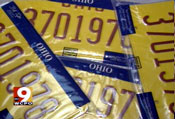
Ohio's New Yellow DUI License Plate

DUI License Plates 12/30/03 8:16:56 AM
By Liz Foreman
Associated Press

Ohio drivers caught driving under the influence of drugs or alcohol
after midnight Wednesday could spend the first part of 2004 driving with
special red-letter license plates.

The state’s new drunken driving law takes effect Thursday. It calls
for all offenders who are permitted to keep driving to display special
license plates until their normal driving privileges are restored.

The special license plates have been available since 1967 but judges
have rarely used them.

Are you looking for a Ohio DUI Attorney?

DUI Attorneys


North Dakota DWI Convictions Don't Apply in Minnesota

North Dakota DWI Convictions Don’t Apply in Minnesota
Cases

Appeal to High Court Could Overturn Ruling
BY DALE WETZEL, Associated Press BISMARCK, N.D.

North Dakota drunken driving convictions can’t be used against drivers
in Minnesota cases, because North Dakota motorists may not be told of
their rights before they are tested for alcohol, the Minnesota Court of
Appeals says.

The ruling came in two appeals from Clay County, Minn., brought by two
arrested separately in Moorhead, Minn., in May 2004.

Nathan Schuster, 30, of neighboring Fargo, N.D., and Wade Little Owl,
31, of Moorhead challenged the prosecution’s use of their North Dakota
drunken driving convictions to bring harsher Minnesota charges against
them for driving while impaired.

North Dakota law does not require motorists to be told of their right
against self-incrimination before they are given a blood or breath test.
Therefore, the Minnesota court ruled, the North Dakota convictions of
Schuster and Little Owl cannot be used against them in their Minnesota
cases.

Schuster has an October 1998 conviction in North Dakota for driving
under the influence, while Little Owl has had three North Dakota
convictions for DWI or refusing a breath test in the past 10 years, the
opinion says.

Ken Kohler, the Clay County prosecutor, said Friday that his office
will appeal the decision to the Minnesota Supreme Court. The ruling was
handed down Jan. 31. “Obviously, when you’re on a border county
… a large number of people drive back and forth, and
if we can’t use North Dakota convictions, it’s difficult to hold someone
accountable,” Kohler said. “There’s a safety issue to the community in
allowing these individuals not to have harsher sentences for repeat DWI
offenses, which this certainly does.”

Minnesota requires that drivers be told of their right to remain
silent and to speak to an attorney before they take a chemical test to
judge possible impairment. North Dakota Supreme Court rulings say a
driver must have a “reasonable opportunity” to consult a lawyer before
taking a test if he or she requests legal counsel. However, police are
not required to inform drivers of their rights.

“Because North Dakota does not require that motorists be informed of
their right to counsel prior to chemical testing, the right loses its
meaningful purpose in practical application,” the appeals court’s opinion
says. “Given that the purpose of the right to counsel is to protect
individuals unfamiliar with the legal system, it is implicit that those
individuals first be informed that such a right exists.”

Wayne Stenehjem, North Dakota’s attorney general, said he did not
believe it is necessary for law officers to routinely advise drunken
driving suspects of their right to a lawyer, although he said many
do.

In North Dakota, motorists who refuse a chemical test have their
driving privileges suspended for a year. Typically, attorneys tell their
clients they must choose whether to take the test or have their licenses
taken, Stenehjem said.

“There’s not a whole lot of expert legal advice that any attorney can
give in that situation,” Stenehjem said. “I’ve done this. This is what
you tell them. If you don’t consent to the test, then that means you’re
going to lose your license for a year … if there was
probable cause to arrest you in the first place.”

Source: http://www.twincities.com/

DUI Attorneys


North Carolina Court Upholds Scooter Driver’s DWI Conviction

North Carolina Court Upholds Scooter Driver’s DWI Conviction

Raleigh, NC-North Carolina State Court of Appeals deemed that certain standup scooters fall under the definition of “vehicle” thus allowing scooter-driving defendants to be convicted of DUI.

Kevin Michael Crow, 27, was operating his two-wheeled scooter when he was stopped. According to the county deputy, Crow had run a stop sign and seemed out of control of his scooter.

At the sheriff’s office, his blood alcohol content (BAC) was measured at 0.13, much higher than the legal limit of 0.08.

Crow contended that the scooter falls into the state’s exceptions for the definition of “vehicle.” While the North Carolina state law does exclude bicycles, lawnmowers, and Segway scooters, it does not include high-speed scooters such as the one that Crow had been driving. The three-judges reviewing the appeal made this conclusion regarding Crow’s scooter.

According to WWAY News of Wilmington, North Carolina, the conviction was upheld and Crow faces two weeks in jail, a year of probation, and driver’s license suspension for two years.

DUI Attorneys


Life In Prison for DUI Offender

DRUNKEN DRIVER IS NOT GIVEN THE DEATH PENALTY IN FIRST DEGREE MURDER
CONVICTION


MAY 8, 1997, WINSTON-SALEM, NORTH CAROLINA:

A jury has spared the life of Thomas Richard Jones on Tuesday in the
landmark First Degree Murder Conviction for Dunk & Drugged driving
crash that took the life of two 19 year old students and injured four
others. He was given life in prison without the possibility of
parole.

The jury of six men and six women took one hour to decide whether this
would also be the first death penalty case for a drunk driving fatal
crash. They decided that there was not sufficient reason to kill him, and
the families of the victims said that they didn’t want the death penalty
as well. They wanted him to suffer in prison.

2nd degree Murder convictions have been common in America for anyone
with a prior conviction for drink driving, but since Jones had two priors
and is yet to be tried on a third, the D.A. argued that he had sufficient
intent to form culpable negligence for a 1st degree conviction. Jones was
not only under the influence of alcohol, but had a tranqualizer and
painkiller in his system at the same time. Just before he killed Maia
Witzl of Arlington, Texas, and Julie Hansen, of Rockville, Maryland, he
bumped another car, hit a curb and nearly flipped over. He then almost
hit another car head on, but swerved and hit the car carrying the two
students.


NUMSKULL TIPPLERS who still may not have gotten the message about
drinking and driving should look to the South to understand the depth of
society’s infuriation with heedless inebriated motorists.

Thomas Richard Jones, 40, who had two prior convictions and a third
charge pending for driving while impaired, was found guilty of murder and
sentenced to life in prison in what is believed to be the first such
conviction and sentence regarding a drunk driving case.

Two 19-year-old women were killed when Jones’ car struck theirs on a
Winston- Salem, North Carolina street. Jones was not legally drunk but
admitted drinking two quarts of beer and taking painkillers before the
crash. The painkiller bottle clearly stated that the patient should not
drink or drive while taking the pills.

While prosecutors went too far in seeking the death penalty, Jones’
incomprehensibe irresponsibility resulted in the deaths of two innocent
women.

There is no excuse for drinking and driving, and Jones’ harsh sentence
should deliver that message.

DUI Attorneys


Tougher DUI Laws

New Law May Increase Drunk Driving Program Enrollment

10/12/2006

(WSYR-TV) – The Onondaga County Prevention Network expects to see a
25% spike in its drinking and driving prevention program because of new
legislation that toughens New York’s drunk driving laws.

The law, signed by Governor Pataki, creates a new crime called
aggravated driving while intoxicated.

It basically means you’ll face higher fines and a longer license
revocation if you’re caught drinking and driving.

The bill has been tied up in Albany for a few years, local councilors
say it’ll help cut down on drunk driving accidents.

Source: http://www.9wsyr.com

DUI Attorneys


Drunk Driving in New York on the Rise

Drunk Driving on Rise
By Nick Reisman, Gannett News Service

ALBANY — With DWI incidents in New York slightly increasing,
anti-drunk driving activists called on the state Thursday to provide not
only tougher enforcement but also better treatment for alcohol abuse. In
2003, 470 highway deaths involved drivers with a blood-alcohol level over
0.08, the legal threshold for a driving-while-intoxicated charge. In
2004, that number jumped to 494, according to the National Highway
Traffic Safety Administration. In a given, a little more than one-third
of deaths from car accidents in the state are alcohol-related, according
to the agency.

Advocates said they were surprised that drunk driving is on the rise.
They blamed advertising of hard liquor in magazines and television aimed
at teenagers.

“We really were riding the wave of
‘we must be doing something right,‒ said
Donna Kopec, the state’s executive director of Mothers Against Drunk
Driving. “It’s become painfully clear that the
country’s efforts have taken a step back.â€

Some activists said the numbers mean that government and society needs
to provide more in the way of substance-abuse treatment.

“It’s cheaper and more effective to teach people
how to get and stay clean and sober than to simply incarcerate
them,†said Michael Eidens, a Schenectady County Legislator
who also is running against Assembly Minority Leader James Tedisco,
R-Schnectady, this fall.

“Treatment for the drug and alcohol abuser is the
right thing,†Eidens said. “It’s right for
the abuser, and right for our communities.â€

In New York, fines for first time DWI offenses can range from $300 to
$1,000 and temporary suspension of a driver’s license.

But other activists, who spoke at the same news conference as Eidens,
said they are worried that the rise in alcohol-related deaths on the road
are the result of lax enforcement and called for stricter penalties.

“Alcohol kills more youth than all illicit drugs
combined,†said Doris Aiken of Remove Intoxicated Drivers,
adding that colleges and high schools should improve their efforts in
educating students on the dangers of binge drinking.

Aiken urged on the state Legislature to increase penalties for drivers
with a blood alcohol content of 0.18 or greater. It would carry a maximum
fine of $2,500 and up to a year in prison for a first time offense.

The bill, which is sponsored by Sen. Charles Fuschillo, R-Nassau
County, and Assemblyman Paul Tokasz, D-Cheektowaga, Erie County, would
also require cars to be equipped with a device that wouldn’t allow a car
to start if the driver is intoxicated.

“The simple reason for this legislation is that
every single day we read in the newspaper and see on TV another DWI
accident,†Fuschillo said. “It’s on the
state to deter people who choose to drink and drive.â€

The proposal would also provide treatment programs which Fuschillo
said was “absolutely necessary†to curtail
offenses.

Source: http://www.pressconnects.com/

DUI Attorneys


Typo in DUI Law

Typo found in N.Y. drunk driving law

Nov 5, 2006

Drinking a shot of beer in New York could get you arrested for drunken
driving, thanks to a typo in a New York law passed this year.

Lawmakers approved a bill that sets the standard for driving while
intoxicated at 0.18 grams of alcohol in a person’s blood. But a person’s
body can produce that much alcohol naturally, according to Rochester DWI
lawyer Ed Fiandach.

Instead of using grams, the law should have used blood alcohol content
as a measure.

Source: msnbc.msn.com

DUI Attorneys