New Mexico Law Enforcement to Get New DWI Equipment

The New Mexico Department of Transportation has announced that police departments across New Mexico can apply for a share of $500,000 to purchase tools to fight drunk driving. The specially earmarked money can be used by law enforcement agencies for car video cameras and innovative items like flashlights with video cameras and flashlights with alcohol sensors. The goal is to help police officers detect and arrest possible drunk drivers.

Rachael O’Conner, DWI Czar for Governor Bill Richardson, and state Transportation Secretary Rhonda Faught also announced a two-week long anti-drunk driving campaign surrounding the Labor Day holiday. The New Mexico DWI Super Blitz is a combined effort by state law enforcement groups and the National Highway Traffics Safety Administration.

DUI Attorneys


This Week

Defiance in California – An Orange County man suspected of drunk driving lead police on a chase and, after attempting to run over the officers, jumped from his vehicle still holding a beer in his hand. The unidentified man was caught and charged with California DUI.

Husband arrests wife in Nevada – Sheriff’s deputy Charlotte Moore was off-duty when she was arrested for drunk driving – by her husband, a fellow deputy. One has to wonder how things went at home after she was released from jail.

Making his mark in Florida – Louis Piselli, 41, apparently angry after being refused service because he was drunk, urinated all over a restaurant bathroom, swore at the bartender, threw her a penny tip and left. Police caught up with Piselli at a Port St. Lucie grocery store and warned him not to ride his bicycle while intoxicated. He ignored the advice and was charged with a Florida DUI.

Driving drunk and blind in Estonia – A 20-year blind man identified only as Kristjan was stopped twice in one week for drunk driving in Tartu, Estonia. The first time he was being guided by a 16-year old though neither had a driving permit. The second DUI charge came when police spotted Kristjan being given driving directions by three passengers. Kristjan reportedly stated that he likes driving and regularly gets behind the wheel of his car. Police have asked a court to seize the vehicle. Estonian law does not forbid a blind person from owning a car.

DUI Attorneys


Oklahoma DUI Impairment Levels Questioned

Drunk driver victims advocates says that Oklahoma DUI laws are weak and the lack of a unified court system helps repeat offenders. Oklahoma DUI defense attorney Bruce Edge counters that the legal threshold for DUI is arbitrary and the laws penalize the wrong people.

The legal definition for drunk driving in Oklahoma, as in the rest of the country, is when a motorist has a blood alcohol content of 0.08% or higher. While law enforcement, advocacy groups and defense attorneys agree that drunk driving is a serious social issue, there is an emerging thought that the 0.08 threshold may not be a true gauge for impairment and that a zero tolerance campaign against drinking and driving has impacted many motorists who are not impaired. Perhaps many would prefer that the system err on the side of caution, but imagine the financial burden, humiliation and possible jail time and loss of job that could come from being accused of driving while impaired while actually being in control of one

DUI Attorneys


Texas Police Department Uses Program to Process DWI Arrests

Police in Burleson, Texas, a suburb south of Fort Worth, recently implemented a new tool designed to shorten the time it takes to process a DWI arrest. The Law Enforcement Advanced DUI/DWI Reporting System (LEADRS) is a computer program that has been in use since July.

On average, it takes 4 to 6 hours to arrest and process a driver suspected of Texas DWI. That includes the traffic stop, questioning of the driver, administration of field sobriety tests, transport of a suspected drunk driver to jail or a police facility, booking and creating an arrest report. The process requires an arresting officer to fill out numerous forms, and much of the information is redundant.

With LEADRS, form fields with recurring information, such as suspect’s name, driver’s license number and date of birth, are automatically filled in. A review of the program’s impact has shown it has reduced the time it takes officers to process a Texas DWI by as much as 50%, far exceeding initial goals.

LEADRS is also capable of creating a report that outlines field conditions and statements that may come up as questions in the courtroom.

Though there are no announced plans to expand use of the program, the Burleson police department and county prosecutor’s office recently hosted a LEADRS information and training seminar with law enforcement agencies from across Johnson County.

DUI Attorneys


Nissan Concept Car Features Anti Drunk-Driving Technology

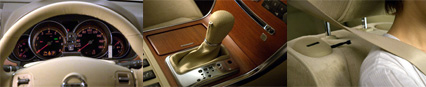
Nissan Anti Drunk Driving CarJapanese automaker, Nissan Motor Company, has unveiled a concept car designed to reduce drunk driving. The vehicle utilizes several sensors to determine the sobriety or alertness of the driver and then initiates measures in response. The sensors can detect the presence of alcohol, monitor facial features for drowsiness and analyze driving behaviors.

The sensitive alcohol odor sensors have been installed in the gear shift knob as well as the seats. They are able to detect alcohol in the driver

DUI Attorneys


New Mexico DWI Flowchart

System 1: License Revoked Upon Arrest

System 2: Criminal Charges in NM Courts

Click here to view the DWI Flow in New Mexico

DUI Attorneys


North Carolina Judge Dismisses DWI Against Woman

A North Carolina Superior Court judge in Raleigh dismissed the charge of DWI against a woman after determining the arresting officer was not a credible witness.

What precipitated the decision was a courtroom challenge to the traffic stop that lead to the drunk driving arrest and a disturbing pattern activity by one Highway Patrol officer. Trooper Scott Harrison has been suspected of targeting young women while on patrol. He often would patrol alone at night, focusing on an area near a college campus. Records show 49% of Harrison’s DWI arrests involved women, compared to a statewide average of 18 percent. Harrison is on administrative duty while the state highway patrol investigates.

In dismissing the case, the Wake County judge stated that the traffic stop in question was “unconstitutional and unlawful” and called Harrison "not trooper material" if there was a pattern to his arrest procedure. The judge’s words caught the attention of North Carolina Highway Patrol officials who are concerned about the public perception of the department.

DUI Attorneys


This Week

Second lawnmower arrest means heavy fine in Virginia – Glenn Bowers, a 46-year old handyman from Waynesboro, finished a lawn-cutting job and started home on a city street on his Craftsman mower. Despite a top speed of 6 miles per hour, Bowers was stopped by police and subjected to a breath test. He registered 3 times the legal limit and was charged with Virginia DUI. Because of another lawnmower DUI arrest in 2003, Bowers was deemed a dangerous driver and is now subject to the state’s abusive driver law. The result could be a minimum fine of $2750 and 20 days in jail. Bowers has already paid $65 for the release of his lawnmower from the police impound lot.

Woman runs over driving instructor in Florida – David Tanner was giving Victoria Hosner, 30, a driving lesson when she suddenly accelerated backward, knocking Tanner down and running over his leg. Though considered a total accident by her husband, Hosner continued in reverse and caused about $6,000 in damage. A responding Naples police officer suspected alcohol and a test revealed a blood alcohol content of .146. Hoser was charged with driving under the influence, three counts of driving under the influence with damage to property or person of another and, of course, driving without a license.

Making it really obvious in North Carolina – Greensboro police were operating a DWI checkpoint when around 1:00 in the morning a car hit a pedestrian. According to reports, Amy Ellison and Daniel Matthews were trying to switch places in their vehicle when a foot got stuck on the accelerator. Their Chevrolet Impala lurched forward, striking an emergency service truck and three other vehicles before hitting the pedestrian. All three were taken to a local hospital with non-life threatening injuries.

DUI Attorneys


State Legislators Question Impact of Abuser Fees

Several states have resorted to civil remedial fees in an effort to raise revenue and reduce certain driving related offenses. The thought is that excessively high fees for offenses like drunk driving and speeding would make people think twice about engaging in those actions.

Texas requires payment of $1000 fee each year for three years for a motorist to renew a driver’s license after a Texas DWI conviction. Virginia recently enacted punishments that can add thousands of dollars in addition to the regular fines for traffic offenses like speeding or driving under the influence.

The impact of these mandatory fees is now being questioned by state legislators. The fees are quite openly viewed as revenue sources by lawmakers, though statistics show not nearly as much is being collected as initially forecast. Collection of the fines is also lagging, as some people charged simply do not have the disposable income to pay the fee.

Opponents cite double jeopardy, paying twice for a single offense that already has a financial penalty. Texas has seen an eleven percent increase in arrest warrants. Some of the warrants involve moving violations but the majority are related to paperwork like licensing problems and expired insurance. Many people trying balance limited budgets pay their bills and accept the risk of an arrest warrant.

Examples have also been cited of motorists stopped for minor violations becoming ensnared in a financial and legal morass. Typically an unpaid fee results in the suspension of one’s driver’s license, making the situation worse. There have been cases of administrative errors resulting in a motorist not knowing his/her license has been suspended. Being stopped for driving with a suspended license would add further fines and reinstatement fees.

In both Texas and Michigan, bills have been referred to the Senate Transportation Committee that would end the collection of driver responsibility fees.

DUI Attorneys


Washington Police Get Light Punishment for DUI

Police officers in the state of Washington appear to take care of their own. An investigation conducted by the Seattle Post-Intelligencer shows that when police officers are suspected of drunk driving, they receive special treatment and lighter punishments than the general public.

Ninety-two police officers have been arrested for Washington DUI over the past seven years. They caused fourteen vehicular crashes, four of which were in state issued vehicles. After the newspaper reviewed internal discipline records, arrest reports, accident reports, license-suspension files and court documents of incidents involving police officers arrested for drunk driving however, they discovered some alarming results. Five officers who had registered a blood alcohol content above the legal limit were never prosecuted. A nearly equal number did not lose their driver’s licenses because fellow officers did not file required paperwork within certain timeframe. Others merely lost vacation days.

When Seattle Police Officer Kevin Williams rolled his vehicle on the interstate highway, he lost five vacation days. Tacoma Police Officer Gurdial Garcha crashed into a telephone pole with a BAC more than five times the legal limit, and he was suspended for two days and lost two vacation days. Maria ‘Susan’ DiTusa crashed a department-owned vehicle into the wall of a tunnel. She identified herself to officers on the scene as a Seattle police detective. A breath test that showed a BAC of 0.137%, but since preliminary tests are not admissible in court and she refused a blood test, her penalty was only losing five vacation days.

Average citizens who took and failed a breath test were more than twice as likely to lose their driver’s licenses than intoxicated police officers. Of those who refused a breath test, over 94% of motorists suspected of drunk driving had their licenses suspended, compared with only 25% of police officers in the same situation. In an apparent double standard, a motorist with a BAC of 0.10 who ran a red light and crashed into a police officer who had a BAC over 0.12 was prosecuted for drunk driving, while the officer was not.

Favoritism between officers was discovered in several instances, including direct requests for breaks, invocations of ‘professional courtesy’, and even threats against officers who attempted to arrest a fellow law enforcement agent. One taped his police identity card to his license as a precaution.

A few law enforcement agencies do have strict penalties for officers charged with DUI, feeling that any favoritism reduces their credibility with the general public. The Seattle Post-Intelligencer findings however, show disciplinary system that is “broken, illogical and unevenly applied.”

DUI Attorneys