MADD Kicks Off Holiday Campaign

MADD Fights Holiday Drunk Driving

MADD RibbonWilmington, NC – In an effort to
combat the sharp increase in drunk driving fatalities that occur around
the holiday season, a MADD (Mothers Against Drunk Driving) group from
Wilmington kicked off a special holiday campaign.

With almost 400 deaths in the state of North Carolina last year, the
group has plenty of motivation for their efforts. The Wilmington MADD
group paired with the law enforcement of New Hanover County for “Tie One on
for Safety
.” The campaign motivates citizens to tie a red ribbon to
their cars to increase awareness about being cautious on the roads during
the holiday season.

November 18, 2005

DUI Attorneys


MADD President Glynn Birth Applauds Delaware Enforcement

MADD President Glynn Birth Applauds Delaware
Enforcement

By Ben Penserga Daily Times Staff Writer

MADD PresidentSALISBURY — It took almost 20 years, but Glynn Birch
finally has the chance to say thank you.

In 1988, Birch’s young son Courtney was walking across the street to
get ice cream when he was struck by a drunken driver going 70 mph. The
boy — three months shy of his second birthday — was dragged 150 feet
before the car stopped and was killed instantly.

In the following months, Glynn Birch’s local Mothers Against Drunk
Driving helped him through the grieving process up until the driver, who
had a blood-alcohol level of .26 and had three prior drunken-driving
convictions, was sentenced to 15 years in prison.

But throughout the entire process, Birch never got to acknowledge the
police officers who responded to the scene on May 3, 1988, and helped
prosecute the case — until Friday at the MADD Ribbon Kickoff and Law
Enforcement Recognition Breakfast.

“I think back to all the missed opportunities to thank law
enforcement,” said Birch, who was recently selected as the first-ever
male MADD president. “But I’m getting that chance now.”

Birch told the crowd of police and prosecutors at the Fountains
Weddings and Conference Center in Salisbury that one of the advocate
group’s main goals is strengthening ties with law enforcement.

And hosting an event that recognizes law enforcement officials from
all nine counties on the Eastern Shore goes toward that, said David
Elzey, victim advocate for MADD’s Eastern Shore chapter.

“It’s to show our appreciation for police getting drunken drivers off
the road,” he said. “It also means a lot to the victims that have been
helped by (police) over the years.”

Friday’s event also serves as the beginning of their holiday ribbon
program that urges motorists to tie the MADD ribbon to their vehicles as
a pledge to be safe on the roadways and especially to buckle up.

Birch urged police to keep up their high level of vigilance.

“Please continue the work because it is making a difference,” he
said.

Anyone interested in participating in MADD’s ribbon campaign should
call 410-742-6233.

Reach Ben Penserga at 410-845-4648 or [email protected].

Originally Published November 19, 2005

DUI Attorneys


Victims, Prevention and MADD

MADD: Tie One On For Safety
MADD Kicks Off Holiday Campaign
MADD President Glynn Birth Applauds Delaware Enforcement
Related Articles in Other Libraries
MADD Tracks State Laws
Last Update: Sunday, March 25, 2007
DUI Attorneys


Preventing Drunk Driving

Drunk Driving: Seeking Solutions (PDF Download)
Non DUI Drinker Needs Ignition Device
Physician’s Report Alcohol Problems – Patients Lose License
 
Ad Campaigns Reduce Drunk Driving
Military Full Dress for DUI’s
Personality and DUI Offenders
DUI Plates in CO?
 
 
Related Articles in Other Libraries
 
 
AZ Wants DUI’s in Newspaper
College Drinking – Changing the Culture
DMV vs Beverage Institute – Ignition Interlock Effectiveness
Mobile Phone Breath Analyzer
New York’s First Scarlet Letter?
New South Wales Taking Keys of DUI’s
Work Off Drunk Driving Conviction
 
What Is an Ignition Interlock Device (IID)?
Bumper Stickers for DUI Offenders
Saab Has New Alcohol Key
Man Must Put DUI Sticker on Car
Sober Up On Tennessee DUI Law
Laws Don’t Seem to Effect Bars From Servers
Nevada City’s Ban
MSU Frats Call for Alcohol Ban
 
Last Update: Sunday, March 25, 2007
DUI Attorneys


Non DUI Drinker Needs Ignition Device

Non-DUI Drinker Can Drive – Using Interlock

Posted on Wed, Aug. 18, 2004

By Patrick Kerkstra

Inquirer Staff Writer

Keith Emerich – the self-described “Joe Six-Pack” who lost his
driver’s license after telling a doctor of his penchant for downing up to
10 Budweisers a day – can get back on the road, a Lebanon County judge
has ruled.

But there’s a hitch.

Before he can drive, Emerich will have to install an “ignition
interlock,” a built-in blood-alcohol breath test that requires the driver
to exhale below 0.025 percent before the car will start. The state’s
legally prohibited level for most drivers is 0.08.

“Just think of the stigma that’s going to put on me, blowing into some
tube just to start your car,” Emerich, 44, said yesterday. “This is how
I’m being treated, like some common criminal.

“And all I did was go to the doctor.”

An irregular heartbeat led Emerich to Lebanon’s Good Samaritan
Hospital in February. When a physician there asked him about his alcohol
use, Emerich candidly acknowledged drinking six to 10 beers a day.
Doctors told him the alcohol was damaging his heart.

Two months later, on April Fools’ Day, he received a letter from the
state revoking his license. The decision was based on the doctor’s
judgment that Emerich had an alcohol problem.

Pennsylvania is one of only six states in the nation that direct
physicians to report drivers with potentially dangerous medical
conditions, and it is the only state to list alcohol abuse as a problem
that should be brought to official attention.

About 230 Pennsylvania drivers lost their licenses last year after
doctors reported their drug or alcohol addiction, the Pennsylvania
Department of Transportation said.

Though the ruling offers Emerich a way to get back behind the wheel of
his Ford Taurus, the judge did not overturn PennDot’s decision to rescind
Emerich’s license. Indeed, Judge Bradford H. Charles wrote Friday that
PennDot was correct to take Emerich off the road.

“If Emerich’s alcohol addiction had progressed to the point where he
could not stop drinking even though it was killing him, how could we
reasonably expect Emerich to forgo alcohol simply to ensure safe
driving?” Charles wrote.

The ruling satisfied PennDot, spokesman Anthony Haubert said. “We feel
that the decision rendered by the Court of Common Pleas clearly
recognized the importance of highway safety.”

But Emerich, who learned of the judge’s opinion Monday, was plainly
angered, and his attorney said the ruling dodged the central question of
the case.

“We’re happy that it gives him a chance to drive, but the ruling
doesn’t answer the ultimate question: Why isn’t he able to drive when he
hasn’t done anything wrong?” said Horace M. Ehrgood, Emerich’s
attorney.

Emerich has one 23-year-old drunken-driving conviction. But his
driving record is otherwise spotless, and he has said repeatedly he does
not drink and drive.

“The ignition-interlock device is usually for repeat DUI offenders,”
Ehrgood said. “He’s not a repeat DUI offender; he didn’t violate any
law.”

Pennsylvania has until now never required an ignition-interlock for
anyone but repeat DUI offenders, said Haubert, the PennDot spokesman.

In the case of repeat offenders, the interlock is kept on for one
year, at a cost of about $1,000 to the driver, Haubert said. PennDot is
uncertain how long it will require Emerich to use an interlock.

Emerich said he may not be able to afford the device, anyway.

“I’m tapped out. I don’t know what to do. I can’t afford to keep this
lawyer I have. I’ve already tapped into my 401(k) for all this,” said
Emerich, who has a job as a pressman at a Lebanon print shop.

“But I guess it’s do what they say or walk for a while.”

———————————————————————-

Contact staff writer Patrick Kerkstra at 610-313-8111 or [email protected].

DUI Attorneys


Personality and DUI Offenders

Characteristics of DUI recidivists: A 12-year follow-up study of first
time DUI offenders.

Cavaiola AA, Strohmetz DB, Abreo SD. Addict Behav 2006; ePub(ePub):
ePub.

Affiliation: Monmouth University, West Long Branch, New Jersey,
USA.

(Copyright © 2006, Elsevier Publishing)

77 individuals convicted of a drinking and driving (DUI) offense were
screened for recidivism approximately 12 years following their first
offense. At the time of the initial DUI conviction, participants were
administered the MAST and the MMPI-2. Participants’ drinking history and
driving history and arrest at the time of screening and at a 12-year
follow-up were also reviewed. The results indicate that, among DUI
recidivists, on average 6 years elapsed between their first and second
DUI offenses. Driving history prior to the first DUI offense was
predictive of later recidivism.

The only significant finding from the MAST and MMPI results was that
repeat offenders tended to have higher scores on the L and K validity
scales of the MMPI (see Forensic Psychology Study below). These results
are discussed in the context of Jessor’s Problem-Behavior Theory and as
well their clinical implications for screening and treatment decisions
involving first time DUI offenders.

Source: http://www.safetylit.org/

———————————————————-

AMERICAN JOURNAL OF FORENSIC PSYCHOLOGY, Volume 16, Number 4, 1998, p.
5-14

MMPI-2 VALIDITY SCALES AND SUSPECTED PARENTAL ALIENATION SYNDROME

by Jeffrey C. Siegel, Ph.D. and Joseph S. Langford, Ph.D.

MMPI-2 validity scales of two groups of parents going through child
custody evaluations, parents who engage in parental alienation syndrome
(PAS) behaviors and parents who do not, were compared. It was
hypothesized that PAS parents would have significantly higher L and K
scales and a significantly lower F scale than parents who do not engage
in these behaviors. Using female subjects, since few males were
available, the hypothesis was confirmed for K and F scales, indicating
that PAS parents are more likely to complete MMPI-2 questions in a
defensive manner, striving to appear as flawless as possible. It was
concluded that parents who engage in alienating behaviors are more likely
than other parents to use the psychological defenses of denial and
projection, which are associated with this validity scale pattern.
Implications of this finding regarding possible personality disorders in
PAS parents are discussed.

Parental alienation syndrome is a term coined by Gardner (1, 2) for
the phenomenon in which a child from a broken marriage becomes alienated
from one parent due to the active efforts of the other parent to sever
their relationship. Rand (3) recently provided an extensive review of the
literature relevant to this phenomenon, broadening the scope to include
writing which described the same or similar Concepts without using
Gardner’s term. Gardner and others (4, 5) have described numerous
behaviors the alienating parent may engage in to harm the child’s
relationship with the other parent, many of which have been described as
“programming” or “brainwashing.” For example, the alienating parent is
likely to make accusations about the other parent in front of the child,
describe the other parent as dangerous or harmful, tell the child that
the other parent does not love him or her, and greatly exaggerate the
other parent’s faults (whether real or imagined). More extreme alienating
behaviors include making false accusations of sexual or physical abuse
and programming the child to believe that the abuse occurred. According
to Gardner, the child becomes aware that the alienating parent wants him
or her to hate the other parent and, out of the need to please the
alienating parent and to avoid abandonment or rejection, the child joins
in the denigration of the other parent.

Source: http://www.fact.on.ca/Info/pas/siegel98.htm

DUI Attorneys


Physician's Report Alcohol Problems – Patients Lose

Physicians Have License to Influence Driving Privileges

Doctors must report any condition that may impair motorists.

According to Commonwealth Court records, Emerich, then 44, was
admitted to Good Samaritan Hospital in Lebanon in February 2004 with
heart palpitations. While taking his medical history, a doctor asked how
much he drank, and Emerich said probably six to eight glasses of beer a
day.

A physician told Emerich that drinking could be bad for his heart, but
nobody said anything at that point about his driver’s license. After a
short hospital stay, he resumed his normal life as a print-shop worker,
taking medication for a heart ailment.

About six weeks later, Emerich was surprised to be notified by mail
that the state Department of Transportation was suspending his license,
based on a doctor’s judgment that he had an alcohol problem.

Emerich’s lawyer, Horace Ehrgood of Lebanon, said his client appealed
to Lebanon County Court, which upheld the suspension in August 2004, then
to Commonwealth Court, which two months ago sustained the county
ruling.

The court said that under the law, PennDOT has the right to pull one’s
license if, ”in the opinion of an examining physician,” a medical
condition is likely to impair your ability to drive safely. The law lists
the use of any drug or substance, including alcohol, as among those
conditions.

So based on a doc’s opinion ‹ informed opinion,
perhaps, but opinion nonetheless ‹ they can take your
wheels away, and put the onus back on you to show you’re capable of
driving once again, Doug.

Emerich has to convince a physician his drinking will no longer impair
his ability to drive (if it ever did), and that’s what he intends to do,
said Ehrgood, adding that his client doesn’t have the money to continue
with court appeals.

The Warrior couldn’t reach Emerich, but Ehrgood said he’s doing well
with the heart problems under control, and he’s getting to work every day
with the help of a co-worker. Ehrgood is unaware of any drinking
problems. ”He hasn’t missed any work,” he said.

Again, the Warrior understands the need to prevent drunken driving.
But in this instance, Emerich, who had a DUI 24 years ago but had a clean
driving record since, was charged with no such thing. No traffic stop, no
blood test, no anything.

”The only crime I committed was getting sick and telling the doctor
the truth,” Emerich told the Associated Press last year.

Emerich did make one mistake, in the Warrior’s view. He declined a
doctor’s request to go to alcohol counseling or therapy. Ehrgood said
Emerich had undergone counseling decades ago for the DUI charge, and felt
it wasn’t necessary now, since he had done nothing wrong.

But he should have taken the opportunity; a counselor’s word that
Emerich had cut back on the juice probably would have carried some
weight, and he might have his license back by now.

”No doubt about it,” Ehrgood agreed.

Nevertheless, the way this thing came down brings George Orwell to
mind. And the potential for patients to withhold vital information from
their doctors for fear of being ratted out is a fearful prospect.

PennDOT spokeswoman Claudine Battisti said the department is aware of
the civil-rights concerns regarding this issue, and tries to balance them
with the safety rights of the general motoring public. ”There are
concerns on both sides,” she said, adding that it’s the Legislature
really setting the rules.

As for what to tell the doctor, ”Hopefully, people will be truthful
with their doctor,” Battisti said, because their health is at stake.

Chuck Moran of the Pennsylvania Medical Society said the law doesn’t
merely recommend that physicians report problems, they’re mandated to do
it. If they don’t, not only could they be cited, but they could be sued
if a patient later was in an accident.

PennDOT processes 40,000 physician-reporting forms each year, Battisti
said. Last year, 5,774 licenses were suspended for medical reasons, 29
percent for seizure disorder, 18 percent for psychiatric problems, 12
percent for bad vision, 11 percent each for cardiovascular and
neurological problems, 10 percent for loss of consciousness, 5 percent
for substance abuse, and 2 percent each for loss or impairment of limbs
and diabetes, Battisti said.

In all, 289 people, including Emerich, had their licenses suspended
for substance abuse.

Many editorial boards and opinion writers have addressed the issues
surrounding Emerich’s case. According to the Warrior’s review, most
concluded that ”Six-Pack Keith” got a raw deal, despite the state’s
need to protect the safety of all motorists.

”Emerich’s driving rights are being restricted for an offense he did
not commit,” said the Lancaster New Era. ”In this country, people are
innocent until proven guilty. In Emerich’s case, he’s guilty until proven
innocent.”

The state sets no limit, Doug, on the amount of alcohol you can drink
per night.

Not yet, anyway.

See Article: Morning Call

DUI Attorneys


King Tut's Brew – The Most Expensive Beer?

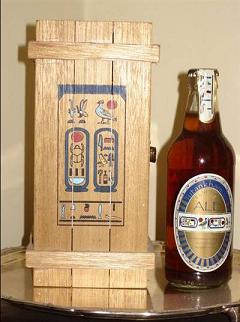
Tutankhamen BrewSome people will do anything for a bottle of beer. At the Indianapolis Museum of Art, some were willing to pay more than $500. The museum auctioned off two bottles of Tutankhamen Ale, a British-made beer purportedly made from a 3,250-year-old recipe of Egyptian beer makers.

A third bottle will be auctioned off tonight. Christopher Stack and Lori Efroymson, both of Indianapolis, each paid $525 for the bottles. Only 1,000 bottles were brewed, and three were donated to the museum. “We didn’t know what to anticipate because we’re not commonly in the business of doing this,” said Anne Robinson, a museum official. “But we’re very happy it worked out so well.”

The beer’s story reads like an Indiana Jones movie. Archaeologists from Cambridge University’s Egypt Exploration Society joined with Scottish and Newcastle Breweries six years ago, when the team uncovered a massive kitchen complex in the Sun Temple of Queen Nefertiti, a relation by marriage of King Tut.

Archaeologists’ key role The archaeologists examined grains and seeds left behind by ancient brewers, and the dregs of beer from excavated jars were analyzed to determine how the beer was made. “Even the pure water of the desert wells was analyzed,” said Jim Merrington, Scottish and Newcastle’s project director. “We studied tomb paintings, deciphered (hieroglyphics) and excavated 10 or more brewing rooms in the quest for the liquid gold of Tutankhamen.”

In reconstructing the recipe, Scottish and Newcastle brew masters used emmer, an ancient wheat grown by the Egyptians, and coriander, an herb found in the Nile region. 1,000 bottles of beer The brewery said enough seeds were grown to create raw materials for only 1,000 bottles of the beer. The first bottle sold in England for about $7,200, and the rest sells for about $75 per bottle, Scottish and Newcastle officials said.

All are being sold at Harrods department store in London, except for the three being auctioned in Indianapolis. That’s a lot of work (and money) for a bottle of beer, which raises the question: Is this the “Beer of Pharaohs” or a mere marketing ploy? Michael Lewis, a retired brewing-science professor from the University of California, Davis, answered diplomatically: perhaps a little bit of both. The auction is being held in conjunction with the opening of an exhibit called “The American Discovery of Ancient Egypt,” on the last stop of its national tour. Proceeds from the auction will be split between the museum and the Egypt Exploration Society.

Saturday, July 13, 1996
Section: Front
Page: 15A
Dateline: INDIANAPOLIS

SAN JOSE MERCURY NEWS

By: Associated Press

DUI Attorneys


Drunk Thinks Cops a Taxi!

Police Play Taxi To Insistent Rider — Free Trip to Jail

The San Francisco Chronicle Thursday, Februay 29, 1996 ·
Page A14

A San Mateo man has found out the hard way the difference between a
taxi and a police car.

San Mateo County sheriff’s deputies reported Tuesday that Leslie Paul
Durnell, 30, was drunk when he climbed into an unmarked sheriff’s car at
1:50 a.m. Saturday in the 100 block of Harbor Boulevard and asked to be
taken to an address.

When ordered out, he became verbally abusive and struck an officer who
tried to arrest him, they said.

“What the f — kind of taxi are you,” he was quoted as saying in a
police report.

DUI Attorneys


Poppy Seed Defense Works on DUI Charge

Poppy seed defense works on DUI charge

CHICAGO, Oct. 18 (UPI) — A suburban Chicago man managed to get out of
a driving under the influence charge stemming from a fatal accident by
saying the poppy seeds did it.

Charles Hausberg, 20, of Lake Forest, was convicted of making an
illegal U-turn but was acquitted of the more serious DUI charge by
successfully arguing the opiate detected in his blood and urine came from
eating poppy seed muffins, not taking morphine.

“The court cannot say that the only cause for this could be the
ingestion of an illegal drug,” said Lake County Associate Judge Patrick
Lawler in rendering his verdict Monday, the Chicago Tribune reported.
“The court has no alternative but to find this young man not guilty.”

Hausberg was sentenced to 50 hours of community service and fined
$500. He also must attend a victim impact panel and substance abuse
program.

Joshua Rothstein, 15, of Wilmette, was killed in an accident that
resulted from Hausberg’s U-turn.

Source: United Press International

DUI Attorneys